

Hey friend,
Let me tell you about the time I almost didn’t buy my first iPhone 📲.
It was 2019. I had saved up to buy it outright. I was about to complete the purchase online, and then I froze 🥶.
The guilt hit me like a wave. I should send this money home. I should use it for something else. This is too much to spend on myself.
I literally had to call my brother for moral support to complete that purchase. Not because I couldn’t afford it. But because spending that money on myself felt wrong somehow.
But guess what? I’ve bought my husband gifts that cost multiple times more without thinking twice. I’ve single-handedly funded one of my siblings through school in the UK (we’re talking serious money here 👀). I regularly spend hundreds on family and friends without hesitation.
But £100 on myself? That requires a three-week internal debate.
That’s when I noticed the pattern: spending on others comes easily with no second thoughts. But spending on myself? That comes with guilt, hesitation, and mental gymnastics.
Something wasn’t adding up 🤔
I think it’s because I’m the first child. I’ve been taught to take care of others my whole life. And don’t get me wrong, that’s not a bad thing in itself. But somewhere along the way, it’s become the thing that stops me from putting myself first
This shows up every time I’m about to spend £100+ on myself, whether it’s skincare refills, booking something nice, or any purchase that crosses that threshold. And it’s not because I can’t afford it. It’s a limiting belief I’ve been carrying.
What are limiting money beliefs?
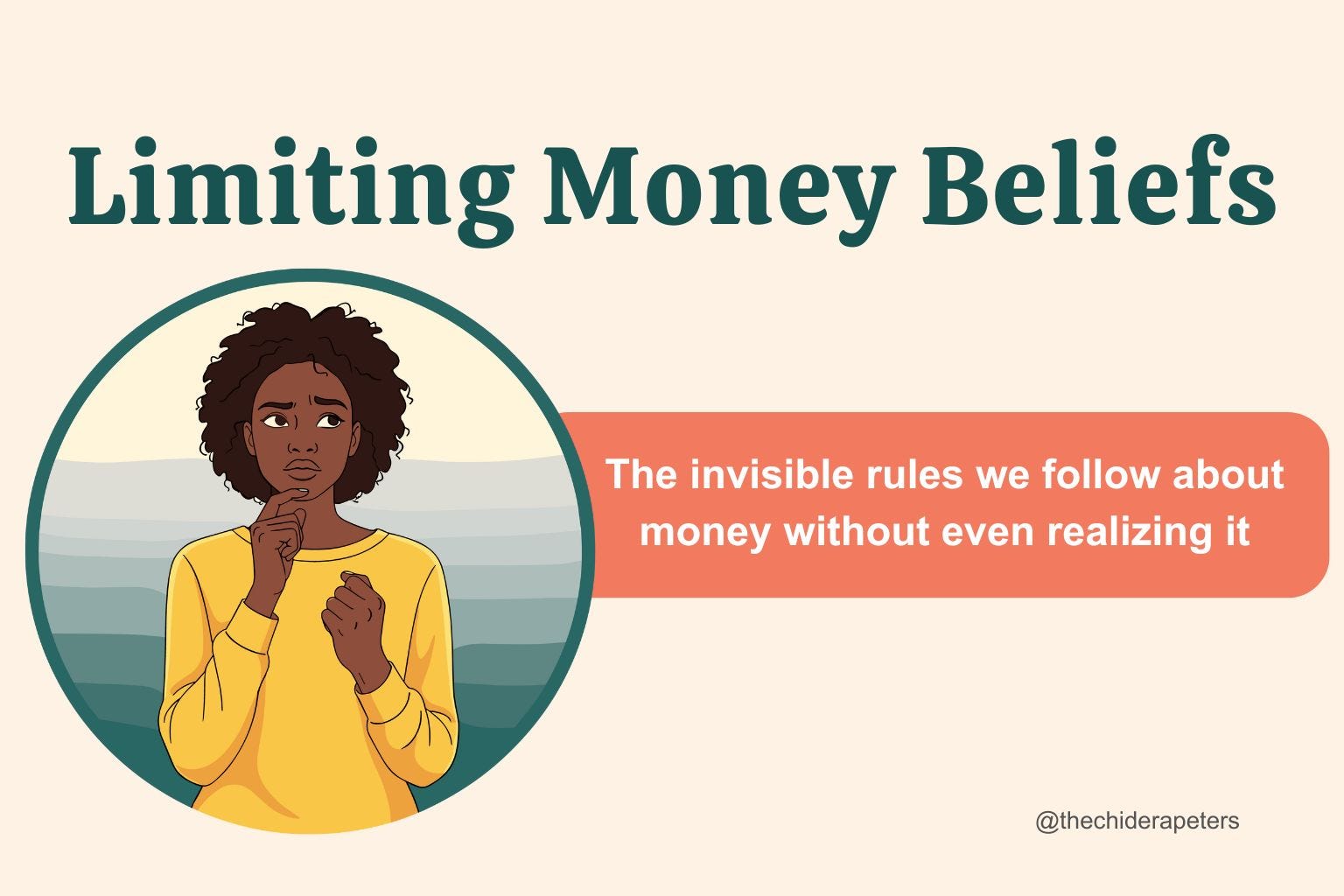
They’re invisible rules we follow about money without realizing it. Stories that shape how we handle money in ways that don’t serve us.
For me, it’s this idea that spending on myself is selfish or wasteful.
But they show up differently for everyone:
“Talking about money is taboo” - You avoid discussing salaries or asking for raises.
Scarcity mindset - Even when you’re doing well, you operate from fear that it could all disappear 😰.
Hoarding in savings - you’re sitting on significant savings with no plan, keeping it in low-interest accounts because investing feels too risky.
“I’m just not good with money” - You’ve told yourself this so many times you don’t even try to improve.
These aren’t facts. They’re patterns. And they often hide as “that’s just the way I am” rather than something we can actually change.
The unlearning process
I’ve been actively working on unlearning mine. My skincare routine is my practice ground. When I catch the internal debate starting, I call it out and buy it anyway, because that voice is lying to me.
I’ve worked hard for my money. I’m responsible with it. I take care of the people I love. So why shouldn’t I also take care of myself?
So let me ask you: What limiting money beliefs are you carrying? And how are they showing up in your life?
Maybe your scarcity mindset means you never take that holiday. Maybe your fear of talking about money means you’ve been underpaid for years. Maybe your “I’m not good with money” story means you avoid your finances altogether.
These beliefs don’t just affect your bank account. They affect your peace of mind, your opportunities, and your quality of life.
It’s time we recognize them for what they are: stories we can rewrite.
Before you go...
The early bird discount for The Money Map Workshop ends on November 30th. This is the only workshop you need to create a step-by-step plan you can actually follow for your 2026 financial goals. 90 minutes together, live, getting clear on what you actually want your money to do next year.
👉🏽 Grab your spot here before the discount ends.
Thanks for reading. Thanks for reading. If this resonated, tap the heart below or screenshot and tag me @thechiderapeters
XOXO
Chidera